


1. What is Digital Marketing?
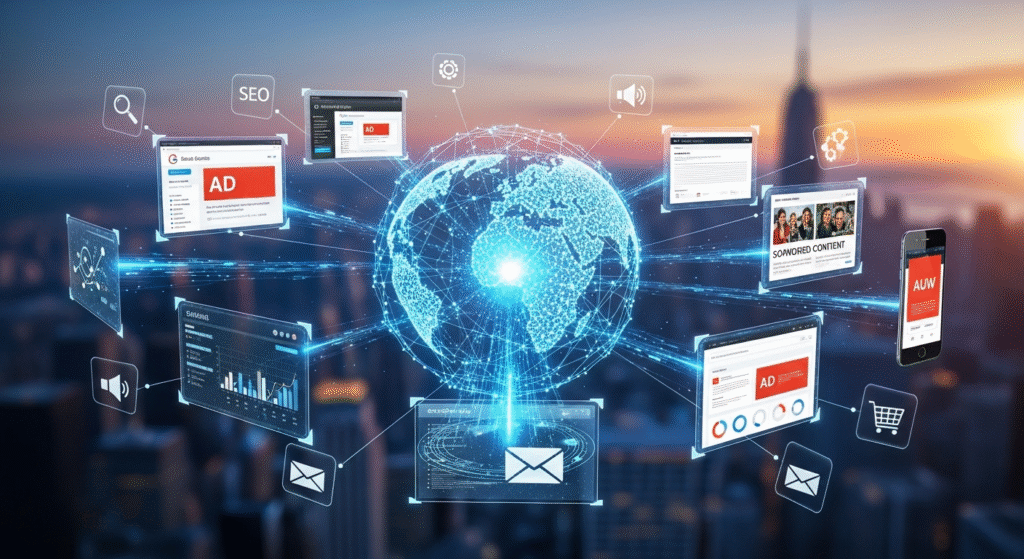
Digital marketing is the promotion of products or services using digital channels such as search engines, social media, email, websites, and mobile apps. Unlike traditional marketing, digital allows businesses to reach a global audience at a lower cost and measure performance in real time.Why Digital Marketing Matters in 2025
- Over 5.5 billion people use the internet worldwide.
- Online shopping, social media influence, and mobile-first browsing dominate consumer behavior.
- Companies that ignore digital strategies are left behind.
Opportunities
- Businesses: Increase sales, build brand awareness, engage customers.
- Students & professionals: Learn in-demand skills, freelance, or build a digital marketing career.
- Entrepreneurs: Start online businesses with lower investment.
2. Digital Marketing Foundations
Understanding the Online Customer Journey: From awareness to conversion, knowing your customer’s path is key.
Digital vs. Traditional Marketing: Online allows better targeting, analytics, and ROI.
Key Channels Overview: SEO, content marketing, social media, email, PPC, and more.
3. Website & Branding
Creating a Professional Website:
- Domain & hosting essentials
- Mobile-first design
- UX for smooth navigation
Branding Essentials: Logo, color palette, tone of voice, and consistent messaging.

4. Search Engine Optimization (SEO)
Basics of SEO: Make your website visible on Google.
On-Page SEO: Titles, meta descriptions, keywords, and content optimization.
Off-Page SEO: Backlinks, guest posting, and authority building.
Technical SEO: Site speed, mobile-friendliness, and URL structure.
Tools: Free (Google Search Console, Ubersuggest) vs. Paid (Ahrefs, SEMrush).
5. Content Marketing
Blogging & Articles: Build authority and attract organic traffic.
Video Marketing: YouTube, Reels, Shorts, and live videos.
Infographics & Visuals: Simplify complex topics visually.
AI Tools: Generate ideas, content drafts, and optimize SEO.
6. Social Media Marketing
Platforms: Facebook, Instagram, X (Twitter), LinkedIn, TikTok.
Content Strategy: Post consistently, mix content types, and track engagement.
Paid Ads vs Organic Growth: Balance both for faster results.
Influencer Marketing: Collaborate with niche influencers.
7. Email Marketing
Build an Email List: Lead magnets, signup forms, and landing pages.
Writing Newsletters: Keep emails valuable and engaging.
Automation Tools: Mailchimp, ConvertKit, etc.
Avoid Spam Filters: Optimize subject lines and content.
8. Paid Advertising (PPC & Display)
Google Ads: Search campaigns, display ads, shopping campaigns.
Social Ads: Facebook, Instagram, and TikTok ads.
Retargeting & Lookalike Audiences: Reach potential buyers again.
Budgeting & ROI: Track every rupee for maximum impact.
9. Analytics & Data
Google Analytics Setup: Monitor traffic, conversions, and behavior.
Measuring KPIs: Leads, CTR, ROI, and engagement.
A/B Testing: Test headlines, designs, and campaigns for better results.
10. E-commerce & Affiliate Marketing
Online Store Setup: Shopify, WooCommerce, or marketplaces.
Product Listing Optimization: Images, descriptions, and keywords.
Affiliate Partnerships: Expand reach and sales through affiliates.
11. Mobile Marketing
SMS Campaigns & Push Notifications: Engage customers instantly.
App Store Optimization (ASO): Rank apps higher in app stores.
12. Future Trends in Digital Marketing (2025+)
- AI & Automation: Smart campaigns, chatbots, predictive analytics.
- Voice Search Optimization: Alexa, Siri, and Google Home.
- AR/VR Marketing: Immersive brand experiences.
- Blockchain & Web3: Transparency, security, and decentralized marketing.
13. Step-by-Step Digital Marketing Plan
- Define clear goals.
- Research and segment your audience.
- Select the right marketing channels.
- Execute campaigns with consistency.
- Measure results & optimize continuously.
14. Tools & Resources
Free Tools: Google Analytics, Canva, Ubersuggest.
Paid Tools: Ahrefs, SEMrush, HubSpot.
Learning Resources: Online courses, YouTube tutorials, certifications.
15. Conclusion
Digital marketing is no longer optional—it’s essential. Start small, stay consistent, and keep learning. Your online business or career growth depends on it.


Pingback: Search Engine Optimization (SEO) - blog.jacobdigitalstore.com